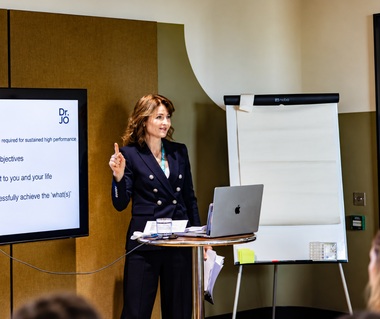
The More You Hold On, The Less You Grow. The Entrepreneur’s Challenge of Letting Go
One of the most common questions I hear from entrepreneurs and founders is 'how do I know when to let go of something I've always done myself?

One of the most common questions I hear from entrepreneurs and founders is ‘how do I know when to let go of something I’ve always done myself?
It sounds like a practical question, but in my experience, it almost never is.
Start with the right question
Before you think about what to let go of, ask yourself why you’re still holding on. There’s an important distinction here that most people miss.
Are you doing it because you’re the only one who can? Or because you’re the only one you trust?
If it’s the first, and there genuinely is nobody else, then this is a resourcing question. The answer is investment: in people, in capability, in training, and in the systems that allow someone else to do what currently only you can do. It’s also worth asking yourself honestly whether you’re really the only one who can, or simply the only one who’s ever been shown how.
But if it’s the second, and there are people around you whom you don’t quite trust to do it the way you would, then this is a different problem entirely. It’s not a capability gap, it’s a psychological one.
Letting go is a skill, not a decision
This is the thing most of us aren’t taught. Letting go isn’t a one-time decision you make in a strategy session. That’s only the first step, the second step is actually doing it, and that’s a skill. Like any skill, it has to be developed in small steps. The challenge is that it takes time and attention, often when you’re at your most stretched.
The founders who do this well don’t suddenly hand over entire functions and hope for the best. They invest in the process through effective communication, delegation and training, which builds trust incrementally. They delegate something small, see it done well, and use that experience to extend trust a little further. Over time, they build the evidence they need to genuinely let go, not just intellectually, but emotionally. Along the way, they grow a strong, capable and confident team who are developing in their roles and contributing to the growth of the business.
Things will not calm down
What I hear from clients at this stage, is: ‘I haven’t got time to sort this out. As soon as I get through this project, I’ll find someone. I’ll deal with it when things calm down.
If you’re in a growing business, things will not calm down, you have to create the time.
The signal to let go
If you’ve grown your business by being hands-on and doing everything yourself, that quality has been one of your greatest assets. But at a certain stage of growth, it starts to become the bottleneck. The business can only move as fast as you can personally handle, and that ceiling gets lower the more the business grows.
The tasks and responsibilities that someone else could be doing are taking up exactly the time and energy you need for what only you can do: the strategic thinking, the relationships, and the decisions that will determine where the business goes next.
So here’s the answer to that original question. You know you need to let go of something when it’s preventing you from doing the things that only you can do, that’s the signal. Not when it feels comfortable, and not when you have spare capacity, because those moments rarely come. The signal is when holding on is costing you more than letting go would.
Where to start
Start with the tasks that are most accessible and most clearly transferable. What do you do regularly that someone else, with the right brief and the right support, could do to the required standard? Start there, build trust and extend gradually.
This isn’t just about efficiency, it’s about sustainability. Founders who can’t let go don’t just limit their business’s growth, they risk their own wellbeing. The burnout I see in entrepreneurs almost always has holding on too tight somewhere near its root.
The business grows when you do. And sometimes, growing means learning to hold less.